ぜひ弊社まで サーバーシャーシ エンジニアおよび営業チーム




チャンネル登録者数24,000人
お客様の用途、シャーシの種類、ラックの高さ、マザーボード、GPU、ドライブベイ、電源、冷却システム、I/O、および注文数量をお知らせください。当社のエンジニアおよび営業チームが、お客様のプロジェクトに適した標準モデルまたはOEM/ODM構成をご提案いたします。.
チャンネル登録者数24,000人
お客様の用途、シャーシの種類、ラックの高さ、マザーボード、GPU、ドライブベイ、電源、冷却システム、I/O、および注文数量をお知らせください。当社のエンジニアおよび営業チームが、お客様のプロジェクトに適した標準モデルまたはOEM/ODM構成をご提案いたします。.

Chassis guide rails support, align, and move equipment inside a structural frame, enclosure, or machine. From sliding server chassis to high-precision automation, the right rail system improves access, load control, positioning accuracy, and service life.Explore the main chassis guide rail applications, compare common rail types, and identify the engineering factors needed to specify a reliable solution.
A chassis guide rail is a mechanical track that controls straight-line movement or supports hardware within a fixed frame. A typical guide system combines a stationary rail with a moving carriage, slide, or bearing block. Depending on its design, the rail may prioritize quick access, smooth linear motion, high rigidity, or heavy load-bearing capacity.
In IT equipment, chassis rail guides normally refer to sliding or static rack rails. In industrial machinery, the term often describes a linear guide rail with recirculating ball bearings or roller bearings. Ball rail systems provide low friction and smooth movement, while roller rail systems offer greater rigidity and load-bearing capacity.
Server rack rails secure a chassis inside an equipment cabinet while simplifying installation and maintenance. Sliding rails allow technicians to pull a server forward and access internal hardware without removing equipment mounted above it. Static rails are suitable for hardware that will remain fixed after installation.
These rail systems support enterprise servers, network switches, telecom hardware, storage arrays, NVR chassis, and backup power equipment. Correct rack depth, mounting-hole type, equipment weight, extension length, and cable-management clearance are essential for safe operation and compatibility.
Industrial automation uses linear rail systems to guide robot axes, gantry systems, pick-and-place equipment, machine tables, assembly stations, and material-handling carriages. A profiled rail and moving carriage provide precise linear motion with minimal friction, helping equipment maintain repeatability under changing loads.
Ball rail systems suit fast assembly, handling, measurement, and robotic applications. Roller rail systems provide increased load capacity and rigidity for machine tools, machining centers, and heavy-duty automation. Seals, wipers, and suitable lubrication help protect the bearing system from dust, chips, coolant, and other contaminants.
In automotive manufacturing, a linear guide can position inspection sensors, welding tools, fixtures, battery modules, and robotic end effectors. High precision and repeatability help control measurement, assembly, and testing operations across multi-axis systems.
On vehicles, heavy-duty rail guides can support sliding doors, movable partitions, access panels, equipment trays, and service modules. The correct configuration must account for vibration, shock, off-center moment loads, corrosion, temperature changes, and maintenance access. Linear-motion technology is used across industrial robots, automotive equipment, and railway applications.
Medical and laboratory machines often require compact components, smooth operation, and accurate positioning. Miniature linear guides are used in medical equipment, surgical robots, semiconductor tools, testing systems, and measuring equipment where space is limited and stable motion is critical.
Aerospace and maintenance equipment may use heavy-duty roller slides, cam-roller tracks, or structural rail systems for lifts, platforms, tooling, and movable service assemblies. Material, coating, cleanliness, noise, corrosion resistance, and magnetic compatibility should be reviewed for each specific application.
Choose the rail type according to the required movement and load:
Fast equipment access and straightforward chassis removal.
Low friction, smooth motion, speed, and positioning accuracy.
High rigidity, heavy loads, and demanding machine applications.
Economical guidance with some tolerance for alignment variation.
Durable performance in dirty, exposed, or high-load environments.
The best linear rail system balances performance, installation space, maintenance requirements, and operating cost rather than relying on load capacity alone.
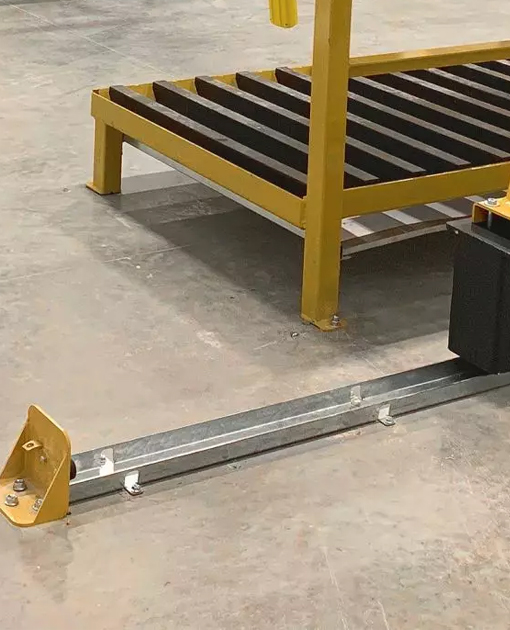
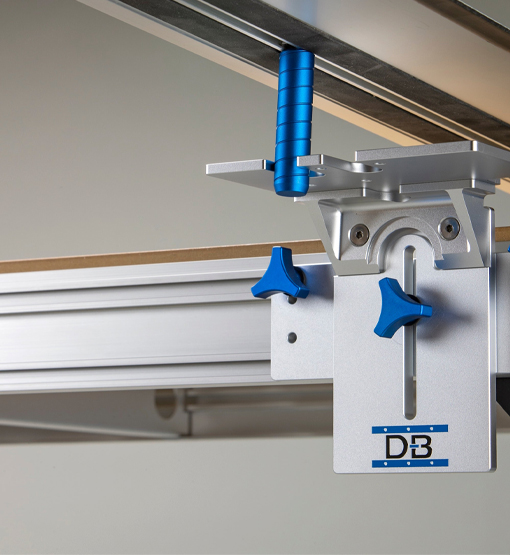
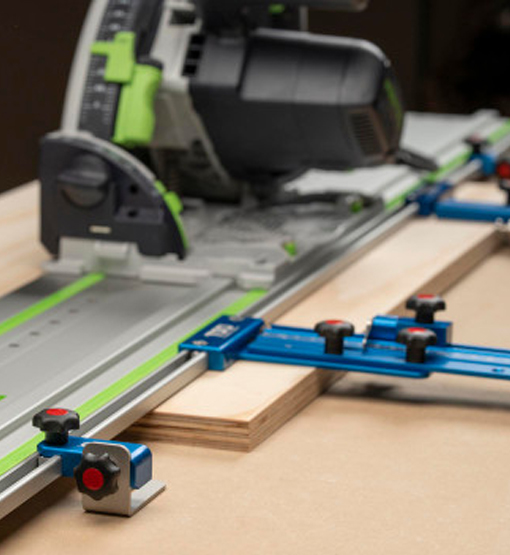
iSTONECASE supplies GPU server cases, rackmount and wallmount chassis, NAS cases, ITX cases, server chassis, and guide rails. Standard and customized solutions are available for data centers, AI computing, storage, and enterprise IT systems.
Choose according to your GPU quantity and size, motherboard format, cooling requirements, storage capacity, and rack space. iSTONECASE offers 4U, 5U, and 6U GPU chassis for AI, deep learning, HPC, and cloud applications.
Yes. iSTONECASE can customize chassis dimensions, internal layouts, cooling systems, drive bays, connectors, appearance, and branding. Its OEM and ODM services cover design, engineering, prototyping, and production.
Check the chassis height, equipment weight, cabinet depth, mounting dimensions, and required extension. iSTONECASE offers guide rails for 1U–4U chassis, with listed load capacities from 38 kg to 100 kg per pair.
Customized OEM or ODM orders generally start from 50 units. Standard products are typically ready within 7–10 business days, while customized orders may take longer; products include a three-year warranty against manufacturing defects.
Submit your equipment dimensions, operating load, required travel, and environmental conditions to receive a suitable rail-system recommendation.


