저희와 상담해 보세요 서버 섀시 엔지니어 및 영업팀




구독자 24,000명
사용 목적, 섀시 유형, 랙 높이, 마더보드, GPU, 드라이브 베이, 전원 공급 장치, 냉각 시스템, I/O 및 주문 수량을 알려주십시오. 당사의 엔지니어 및 영업팀이 귀사의 프로젝트에 적합한 표준 모델 또는 OEM/ODM 구성을 추천해 드리겠습니다.
구독자 24,000명
사용 목적, 섀시 유형, 랙 높이, 마더보드, GPU, 드라이브 베이, 전원 공급 장치, 냉각 시스템, I/O 및 주문 수량을 알려주십시오. 당사의 엔지니어 및 영업팀이 귀사의 프로젝트에 적합한 표준 모델 또는 OEM/ODM 구성을 추천해 드리겠습니다.

A server case, or server chassis, protects and organizes server hardware while supporting uptime, cooling, storage density, expansion, and service access. Unlike an ordinary desktop case, it is designed around sustained workloads, stronger airflow, protected cabling, and rack or enterprise deployment. The right form factor depends on location, rack space, noise limits, workload, drive count, and maintenance needs.
A tower server is best suited for a clinic, law firm, retail location, or branch office that needs one or two systems without dedicated data centers and server rooms. A tower server chassis resembles an upright PC and can suit quieter environments or first-server deployments.
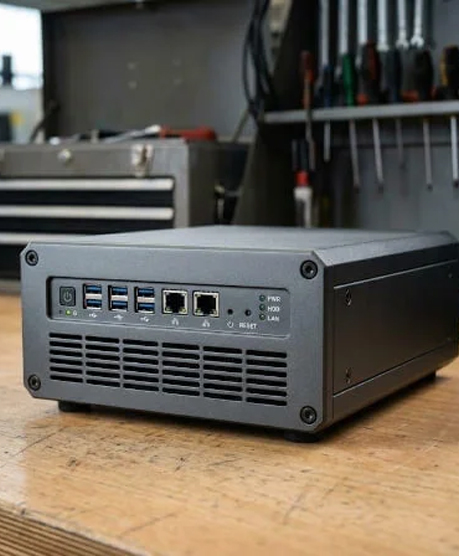
A mid tower ATX case supports standard hardware while a full tower offers more internal expansion.
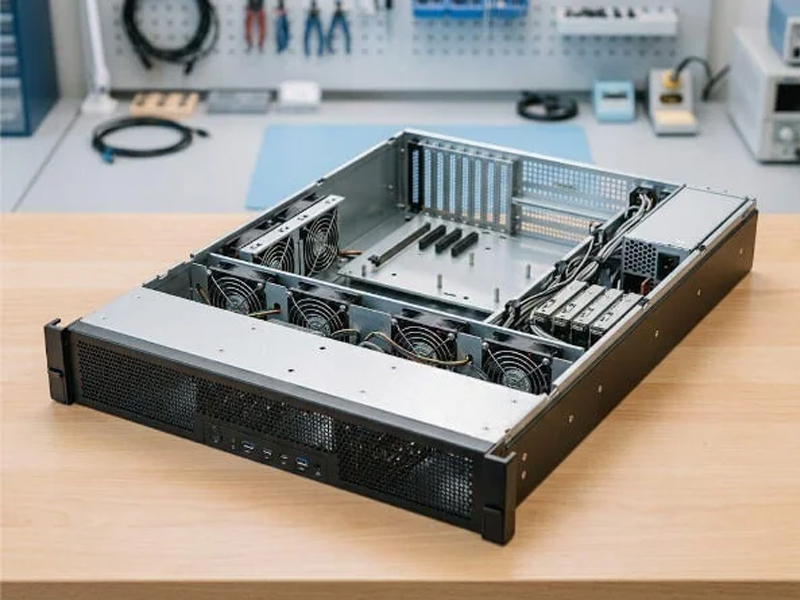
먼저 구축 환경을 선택한 다음, 마더보드 크기, 전원 공급 장치, 드라이브 베이, 확장성, 냉각, 랙 깊이 및 케이블 배선 등을 확인하십시오. 서버 인프라는 항상 안전하게 보호되고 접근 가능해야 하므로, 제작 품질과 유지보수 용이성은 매우 중요합니다.
| Server Case Type | Best Suited For | Main Aadvantage | Important Consideration |
|---|---|---|---|
| 타워 | Small Offices And First Servers | Quiet Placement and Familiar Access | Floor Space and Limited Centralization |
| 랙마운트 | Corporate IT, Hosting, Virtualization | Organized Hardware, Cabling, and Maintenance | Rack Depth, Rrails, Noise, and Cooling |
| Blade/High-Density | Enterprise Virtualization and HPC | Consolidated Compute in Shared Infrastructure | Enclosure, Power, Cooling, and Network Dependency |
| Storage/JBOD | NAS, Backup, Surveillance, Archives | High Storage Capacity and Serviceable Disks | Backplane, Controller, Bay, and Drive Compatibility |
A tower server is best suited for a clinic, law firm, retail location, or branch office that needs one or two systems without dedicated data centers and server rooms. A tower server chassis resembles an upright PC and can suit quieter environments or first-server deployments.
A mid tower ATX case may use ATX power hardware, while a full tower workstation may allow more internal expansion. Listings may mention ATX motherboard, micro-ATX, mini-ITX, support ATX, ATX PSU, massive ATX, 3 x 5.25, 2 x 5.25, 7 PCI slots, or Rosewill Thor NAS. Treat every phrase as model-specific.
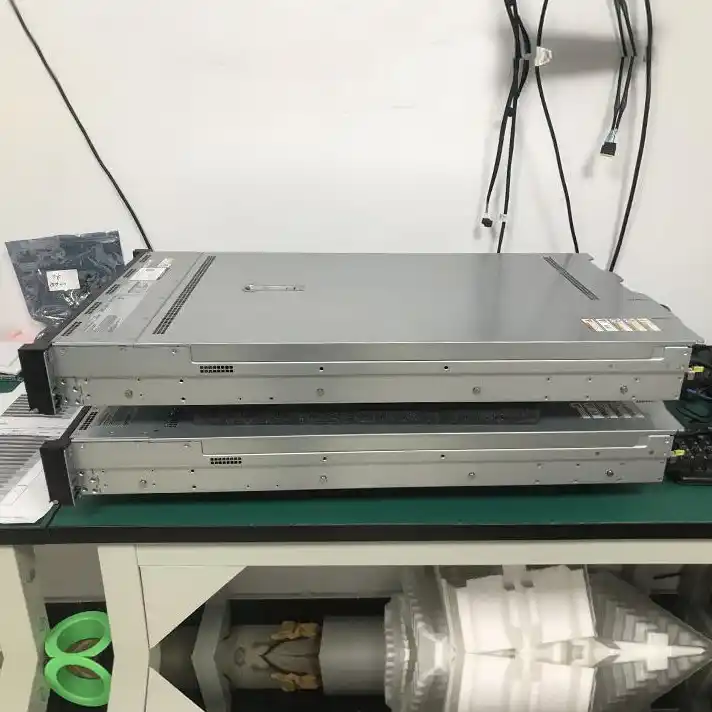
A rackmount server is best suited for companies centralizing several servers, hosting platforms, and virtual machines. Rack mount systems install horizontally in standardized server racks, helping teams organize hardware, cabling, cooling, and maintenance.
Before ordering a rackmount server case, confirm rails, rack depth, front panel access, 2x USB 3.0 needs, cable clearance, and whether the rackmount chassis follows a standard rackmount layout. A rackmount case can support efficient server operations, but fan noise and room cooling need planning.
One rack unit equals 1.75 inches. A 1U design prioritizes density; a 2U server chassis provides more cooling, storage, and PCIe room. A 2U rackmount server chassis is often a balanced choice for growing server solutions, while a simpler 2U chassis may target a specific storage or compute layout.
A 3U chassis or 3U server chassis allows taller components. A 4U server chassis or 4U rackmount server case can accommodate larger motherboards, GPUs, and more drive positions. Some 4U cases use 80mm fans, 120mm units, or front 120mm fans. A 5U design offers still more vertical space. The main trade-off is rack density versus expansion.
A blade server is best suited for large virtualization clusters, enterprise computing, and selected high-performance computing (HPC) workloads. Modular compute nodes share an enclosure, power supplies, cooling, management, and networking, which can consolidate infrastructure.
Choose high-density systems when standardized deployment and centralized administration justify the enclosure investment. The trade-off is greater dependence on the modular platform and careful capacity planning.
공장
기술 지원
100 %
건강에 무해한
A storage chassis is best suited for network-attached storage (NAS), just a bunch of disks (JBOD), backup, archival, and surveillance retention. Choose it when storage needs, storage options, and serviceable drive bays matter more than maximum compute density.
Model sheets may specify SATA, SAS, hot-swappable 3.5-inch disks, x 3.5 HDD positions, or x 2.5 SSD slots. Counts such as 4 x 3.5, 7 x 3.5, 8 x 3.5, 11 x 3.5, 13 x 2.5, or 24 drives are not universal. Confirm controller, backplane, bay spacing, cooling, and cable requirements.
A GPU workstation or rendering server is best suited for AI, visualization, simulation, and technical computing. Choose a larger 4U system when full-length PCIe cards, strong airflow, higher-output power supplies, and service access are required.
Confirm E-ATX or CEB motherboard fit, slot spacing, card retention, PSU length, and thermal design. Buyers may encounter a Supermicro chassis or products from Chenbro, Rosewill, SilverStone, and iStarUSA; compare exact specifications rather than assuming brand-wide support.
Start with the workload and installation site, then match motherboard dimensions, PSU format, rack depth, expansion slots, drive dimensions, backplanes, cooling, and cables. Product specifications vary: mini-ITX, ATX, E-ATX, CEB, and other motherboards are not interchangeable in every model.
Check the exact board dimensions and mounting pattern, not only the family label. An ATX server case may not fit every oversized board.
No. Some designs use ATX power supplies; others require redundant or proprietary units. Verify electrical capacity, connector type, physical size, and airflow direction.
Allow for current data, redundancy, growth, spares, and backup strategy. More drive bays can increase capacity, power draw, heat, weight, and controller requirements.
Share your workload, deployment environment, motherboard form factor, CPU or GPU needs, drive count, rack depth, cooling, networking, expansion, and power requirements. We’ll help you compare tower, rackmount, storage, and high-density chassis and recommend a compatible solution.


