저희와 상담해 보세요 서버 섀시 엔지니어 및 영업팀




구독자 24,000명
사용 목적, 섀시 유형, 랙 높이, 마더보드, GPU, 드라이브 베이, 전원 공급 장치, 냉각 시스템, I/O 및 주문 수량을 알려주십시오. 당사의 엔지니어 및 영업팀이 귀사의 프로젝트에 적합한 표준 모델 또는 OEM/ODM 구성을 추천해 드리겠습니다.

산업용 컴퓨터가 공정 현장에 점점 더 가까이 배치되고 있다.
에어컨이 가동되는 IT실에 숨겨져 있는 것도 아니고, 항상 19인치 랙 안에 가지런히 놓여 있는 것도 아닙니다.
이 장비들은 생산 설비 옆, 기계 구조물 내부, 공장 벽면, 검사 스테이션, 보안 시스템, 엣지 컴퓨팅 노드, 그리고 사용 가능한 공간이 센티미터 단위로 측정되는 자동화 캐비닛 등에 설치되고 있습니다.
그러면 섀시 문제가 달라집니다.
~에 따르면 IMARC 그룹의 산업용 PC 시장 조사, 전 세계 산업용 PC 시장은 2025년에 약 56억 달러를 기록했으며, 2034년에는 80억 달러에 달할 것으로 전망되어 2026년부터 2034년까지 연평균 성장률(CAGR)이 3.86%를 기록할 것으로 보인다. 2025년 기준 아시아태평양 지역은 시장 점유율의 38.3% 이상을 차지했다.
성장 수치가 중요합니다.
엔지니어링상의 세부 사항이 더 중요합니다.
이 사례 연구에서는 대표적인 벽걸이형 산업용 컴퓨터 프로젝트와, 단순한 금속 상자를 실용적인 산업용 컴퓨팅 플랫폼으로 탈바꿈시키는 데 필요한 의사결정 과정을 단계별로 살펴봅니다. 이 구성은 iSTONECASE 벽걸이형 플랫폼 전반에 걸쳐 적용되는 요구 사항 유형을 기반으로 하며, 고객별 상업적 정보는 의도적으로 생략되었습니다.
초기 요청은 한 문장으로 요약할 수 있습니다:
랙이나 바닥 공간을 차지하지 않고 기계 바로 옆에 설치할 수 있는 산업용 컴퓨터가 필요합니다.
쉬워 보이네요.
그러자 부품 목록이 도착했다.
이 시스템에는 풀사이즈 산업용 마더보드, 여러 개의 PCIe 카드, 로컬 스토리지, 전면 USB 포트, 직렬 연결 기능, 적절한 CPU 냉각 장치, AC 전원 공급 장치, 먼지 방지 장치, 벽걸이 브래킷, 유지보수용 접근구, 그리고 설치 후에도 안정적으로 유지될 수 있는 충분한 구조적 강성이 필요합니다.
이제 이건 단순한 상자가 아닙니다.
~을 고려 중인 구매자는 벽걸이형 산업용 컴퓨터 설치된 시스템 전체를 고려해야 합니다. 즉, 벽면 위치, 주변 기계, 케이블 진입부, 기류 방향, 유지보수 공간, 오염, 열원, 그리고 3년 후 실제로 해당 기계를 정비할 담당자가 누구인지 등을 고려해야 합니다.
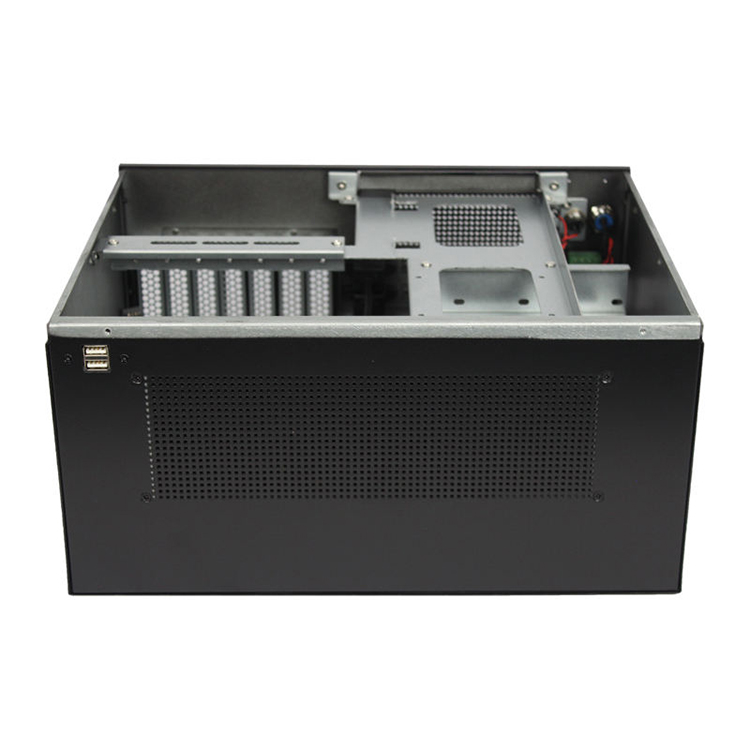
이러한 유형의 프로젝트에서는 6슬롯 아키텍처가 유용한 기준이 됩니다. 예를 들어, iSTONECASE가 공개한 ISC-WMS38CD M 플랫폼은 330 × 410 × 200 mm 크기의 케이스, 6개의 PCIe 슬롯, 120 mm 팬, ATX 전원 공급 장치 지원, 13.3인치 디스플레이, 스토리지 장착 공간, 최대 165 mm 높이의 CPU 쿨러 장착 공간을 갖추고 있습니다.
해당 공개 플랫폼은 범용 사양이 아닙니다.
이는 설계상의 문제를 보여줍니다.
비교적 소형인 벽걸이형 시스템이라 해도 메인보드만 탑재할 수는 없습니다.
| 프로젝트 요구사항 | 구매자가 처음에 보게 되는 것 | 섀시 엔지니어가 확인해야 할 사항 |
|---|---|---|
| 벽걸이 설치 | 마운팅 브래킷 추가 | 적재 중량, 브라켓 설치 위치, 벽체 구조, 설치 여유 공간 |
| 산업용 마더보드 | 보드가 인클로저에 잘 맞습니다 | 공간 확보, 후면 I/O, CPU 쿨러, RAM, 커넥터, 케이블 연결 공간 |
| PCIe 확장 | 슬롯이 충분하다 | 카드 길이, 높이, 커넥터 방향, 고정 방식 및 공기 흐름 |
| 강제 공기 냉각 | 선풍기 추가하기 | 흡기 구역, 배기 경로, 필터 저항, 재순환 |
| 먼지 방지 | 필터 추가 | 압력 강하, 세척 주기, 도구 없이도 접근 가능 |
| 스토리지 | SSD/HDD 설치 | 진동, 케이블 배선, 교체 시 접근성 |
| 전면 I/O | USB 및 스위치 추가 | PCB 정렬, 커넥터 간극, 케이블 스트레인 릴리프 |
| 벽면 설치 | 공간 절약 | 기술자 접근성, 케이블 굽힘 반경, 열풍 재순환 |
| 강철 인클로저 | 견고한 섀시 | 중량, 브라켓 하중, 제작 비용, 접지 |
| 향후 업그레이드 | 여유 공간을 남겨 두세요 | PSU 여유 공간, PCIe 장착 공간, 통풍 및 내부 접근성 |
바로 그 마지막 열이 프로젝트의 성패를 좌우합니다.
잘못된 첫 번째 질문은 다음과 같습니다:
섀시를 얼마나 작게 만들 수 있을까요?
더 적절한 질문은 다음과 같습니다:
조립이 완료된 컴퓨터가 실제로 얼마나 많은 공간을 차지할까요?
그건 비슷하게 들리네요.
그렇지 않습니다.
깊이가 300mm인 섀시는 물리적으로는 벽에 설치될 수 있더라도, 전원 케이블을 뒤쪽으로 70mm 더 확보해야 할 경우 유지보수가 불가능해질 수 있습니다. 측면 패널은 기술적으로는 열릴 수 있더라도 근처에 있는 기계 보호 장치에 부딪힐 수 있습니다. 전면을 향한 커넥터는 배관 설치 후 손이 닿지 않게 될 수 있습니다.
바로 이런 이유에서입니다 산업용 PC 케이스 설계 CAD 형상을 확정하기 전에 설치 조건, 부품 도면, 유지보수 접근성, 기류, 케이블 및 환경적 노출 요인부터 고려해야 합니다.
우리는 섀시 외형을 세 가지 서로 다른 부피로 간주합니다:
세 번째 항목을 무시하면 기술자들이 싫어하는 멋진 CAD 파일을 만들 수 있습니다.
데스크톱 컴퓨터 한 대가 수평면 위에 놓여 있다.
벽걸이형 컴퓨터는 사용 기간 내내 매시간마다 장착 구조물에 매달려 있습니다.
중력이 갑자기 인클로저 사양의 일부가 된다.
무거운 전원 공급 장치, 저장 장치, 확장 카드, 디스플레이 및 강철 패널은 모두 벽면 연결부에 하중을 가합니다. 내부 질량이 장착 표면에서 멀리 떨어진 곳에 집중되어 있다면, 그 하중 또한 지렛대 효과를 일으킵니다.
따라서 우리는 총 중량만 보는 것이 아닙니다.
다음 내용을 살펴봅니다:
무거운 인클로저에 작은 브래킷이 달려 있나요?
나쁜 거래다.
판금 비용에서 몇 센트만 아껴도 설치 과정에서 훨씬 더 큰 비용이 드는 문제가 발생할 수 있습니다.
팬은 지정하기 쉽습니다.
공기 흐름은 더 까다롭습니다.
팬 제조업체에서는 자유 공기 흐름 수치를 제공해 줄 수 있습니다. 하지만 그렇다고 해서 필터, 드라이브 브래킷, 케이블, 방열판, PCIe 카드, 천공 패널, 전원 공급 장치가 포함된 조립된 산업용 컴퓨터를 통과하는 공기량이 동일하다는 의미는 아닙니다.
저항은 모든 것을 바꿉니다.
현장에서는 그 교훈이 끊임없이 드러납니다.
최근 자동화 관련 논의 내용을 살펴보던 중, Control.com에서 오래되었지만 안타깝게도 여전히 시의적절한 게시물을 발견했습니다. 한 엔지니어는 여러 서보 드라이브와 함께 작은 인클로저에 PC 기반 제어 장치가 설치된 기계에 대해 설명했습니다. 이 드라이브들은 상당한 열을 발생시켰습니다. 환기 필터를 예정된 일정에 따라 교체하지 않으면 PC가 금세 과열될 수 있었습니다.
여기서부터가 골치 아픈 부분입니다.
기계들이 단순히 정지한 것만은 아니었다.
이들 장비는 예측 불가능한 작동을 보였기 때문에, 유지보수 담당자들이 열 관련 문제를 파악하기가 훨씬 더 어려워졌다. 엔지니어는 공기 흐름이 제한되어 온도가 지나치게 높아지기 전에 필터 상태를 모니터링할 방법을 모색하고 있었다.
그 이야기가 제 머릿속에 깊이 남아 있는 이유는, 산업적 실패가 어떻게 막대한 비용을 초래하게 되는지를 정확히 설명하고 있기 때문입니다.
별다른 변화는 보이지 않는다.
그 기계는 그냥 이상해져 버린다.
먼지 필터는 종종 액세서리로 분류됩니다.
저는 그런 해석에 동의하지 않습니다.
시스템이 여과된 흡기 공기에 의존하는 경우, 필터는 열 설계 구조의 핵심 요소입니다.
바뀝니다:
엔지니어링 실에 있는 결함 없는 시제품은 아주 훌륭하게 작동할 수 있다.
6개월 뒤, 어느 공장 안에서?
그건 또 다른 이야기다.
이것이 바로 iSTONECASE가 소형 필터 장착형 제품도 제공하는 이유 중 하나입니다. 예를 들어, ISC WMS31W M 모델은 탈착식 먼지 필터와 80 × 25 mm 냉각 장치를 결합하여, 소형 산업용 및 엣지 환경에 최적화된 230 × 230 × 155 mm 크기의 벽걸이형 인클로저에 탑재되어 있습니다.
의 경우 맞춤형 산업용 PC 케이스, 따라서 우리는 첫 번째 시제품이 나온 후가 아니라 설계 단계에서 필터 접근 방식을 논의합니다. 이 사이트의 OEM/ODM 워크플로는 특히 열 설계 및 기계 설계, 시제품 제작, 부품 적합성 검토, 제조, 그리고 양산 전 테스트를 포괄합니다.
필터를 교체하려면 컴퓨터를 벽에서 분리해야 한다면, 결국 누군가는 필터를 교체하지 않게 될 것입니다.
사람의 행동을 중심으로 디자인하십시오.
단순한 희망사항이 아닙니다.
또 다른 함정이 있습니다.
일부 구매자는 원하는 CPU 온도를 지정하지만, 설치된 케이스 주변의 최대 주변 온도는 알려주지 못합니다.
그 수치는 서로 독립적인 것이 아닙니다.
현재의 산업용 박스형 PC는 실제 적용 대상이 얼마나 광범위해질 수 있는지를 잘 보여줍니다. 콘트론(Kontron)은 자사의 KBox A-151 산업용 컴퓨터가 벽면 장착 또는 DIN 레일 장착이 가능하며, 0°C에서 +60°C 사이에서 작동하고, 옵션 사양을 통해 -40°C에서 +60°C까지 작동 범위를 확장할 수 있다고 밝혔습니다.
그렇군요 not 이는 모든 벽걸이형 산업용 PC가 자동으로 -40°C까지 견딜 수 있도록 설계되어야 한다는 뜻입니다.
이는 온도 범위가 프로젝트 개요에 포함되어야 함을 의미합니다.
온도가 조절되는 검사실에 설치된 컴퓨터는 단 한 가지 임무를 수행합니다.
발열이 발생하는 구동 장치, 용광로, 압축기, 모터 또는 실외 장비 옆에 설치된 시스템에는 또 다른 장점이 있습니다.
마더보드는 동일합니다.
완전히 다른 외관입니다.
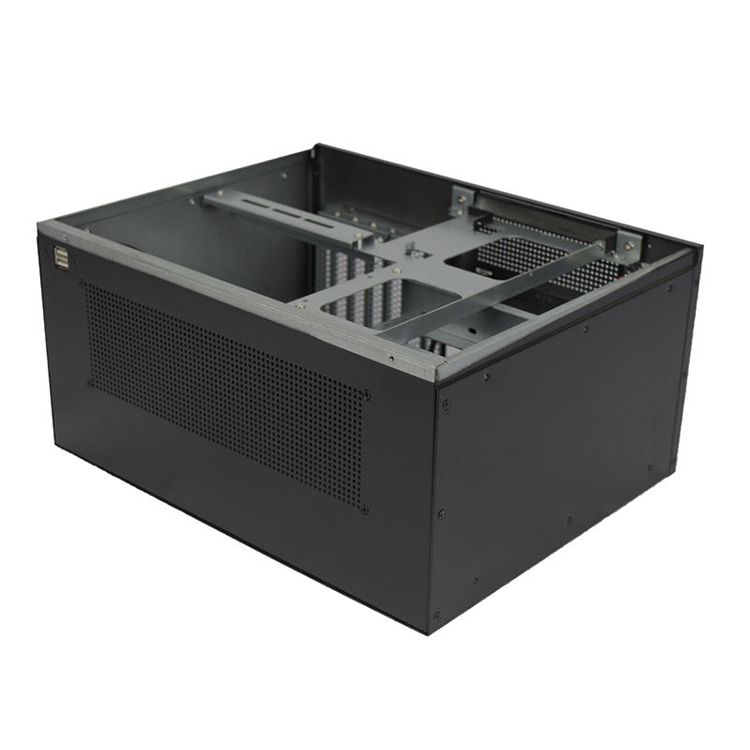
“PCIe 슬롯 6개.”
알겠어.
어떤 카드들인가요?
이 질문 하나만으로도 몇 주나 시간을 절약할 수 있습니다.
네트워크 카드는 크기가 작고 냉각이 비교적 쉬울 수 있습니다. 프레임 그래버 카드는 높은 방열판을 장착하고 있을 수 있습니다. 산업용 I/O 보드는 여러 개의 외부 커넥터가 필요할 수 있습니다. GPU는 대형 쿨러, 상당한 무게, 보조 전원 케이블을 필요로 할 뿐만 아니라 훨씬 더 높은 열 부하를 발생시킬 수 있습니다.
슬롯 수는 3D 기하학적 구조에 대해 거의 아무런 정보도 제공하지 않습니다.
현재 시중에 나와 있는 벽걸이형 시스템들은 이러한 추세가 어디로 향하고 있는지 잘 보여줍니다. 어드밴텍(Advantech)의 IPC-730 데스크톱/벽걸이형 섀시는 ATX/mATX 마더보드, ATX 3.0 고출력 전원 공급 장치(PSU), 전면 I/O 포트, 그리고 최대 450W의 GPU를 지원하도록 설계되었습니다.
모든 자동화 컴퓨터에 450W급 GPU가 필요한 것은 분명 아닙니다.
중요한 점은 “벽걸이형’이 더 이상 ”벽에 볼트로 고정된 저사양 사무용 PC’를 의미하지 않는다는 것입니다.“
이제 폼 팩터가 머신 비전, AI 추론, 이미지 처리, 보안 분석 및 기타 워크로드와 중복될 수 있어, 확장 및 열 설계가 훨씬 더 까다로워졌습니다.
This is one of those details people laugh at until it ruins a prototype.
Cables need space.
A connector can fit perfectly inside the chassis while the mating cable cannot physically bend without hitting the lid, fan, drive cage, or neighboring card.
So we stopped evaluating components as bare dimensions.
For every important connection, the design review considered:
It sounds painfully detailed.
좋아요.
Industrial chassis design should get painfully detailed before tooling and production start.
A buyer browsing the site’s 산업용 컴퓨터 케이스 range can see why slot count, motherboard size, cooling, storage, and front-panel features vary across the 2-, 4-, 6-, and 7-slot wallmount families rather than being forced into one enclosure.
This is where sourcing teams and maintenance teams often want different things.
Procurement sees:
Maintenance sees:
Both teams are right.
The chassis has to satisfy both.
For our representative project, that meant giving front access more importance than it would receive in a conventional desktop enclosure.
Front-facing USB, status indicators, controls, removable filters, and accessible fasteners are not glamorous.
They save time.
And time is what the technician remembers.
This one tends to annoy people.
A higher IP rating does not automatically mean a more reliable industrial computer.
Sometimes it produces a thermal problem while trying to solve an environmental one.
Seal every opening and heat becomes harder to remove. Add filtered ventilation and the enclosure is no longer simply sealed. Add fans and you add moving parts. Add a heat exchanger or enclosure air conditioner and you add cost, size, maintenance, and power consumption.
There is no free lunch.
A Reddit r/PLC discussion gives a more brutal example. One user described trying an IP65-rated panel PC in a washdown environment; the unit reportedly survived about a week before cleaners damaged it, even though it was installed behind a plexiglass plate. Other engineers in the discussion pointed toward stronger washdown protection and better installation practices.
The lesson is not “IP65 is bad.”
The lesson is: the rating has to match the actual exposure.
Water droplets, high-pressure washdown, conductive dust, oily mist, ambient heat, indoor factory dust, humidity, and outdoor weather are different problems.
So I would rather approve an enclosure with an appropriate protection strategy, verified thermal behavior, maintainable filtration, and sensible service access than over-specify a rating because it looks impressive in an RFQ.
CAD approval is not production approval.
그 차이는 중요합니다.
Once the first layout exists, the project needs a mechanical review from several angles.
Does every selected motherboard, PSU, storage device, expansion card, cooler, and connector physically fit?
Can somebody actually build it?
차이가 있습니다.
If the motherboard blocks access to a PSU screw that must be installed first, the components technically fit but the assembly process fails.
Can installers reach the mounting holes while supporting the chassis?
Can the enclosure be mounted before the internal computer is installed?
Can cables be connected after mounting?
Does intake air reach the components that need it, or does it take the path of least resistance and bypass the hot zones?
Can filters, storage, fans, and common failure items be serviced without dismantling half the machine?
Can the design be bent, welded, punched, coated, assembled, and inspected repeatedly without turning every unit into a hand-fitted prototype?
This stage is where a lot of “small” changes happen.
Small changes are cheap now.
They are painful after 500 units.
A good prototype review is not a product photoshoot.
We want to find annoying things.
We want to discover that one connector is hard to reach.
We want to see that a cable rubs against an edge.
We want to notice that the filter cover takes too long to remove.
We want to catch a fan cable hanging in the airflow.
We want the mounting bracket to flex now, not at the customer site.
Boring discoveries save money.
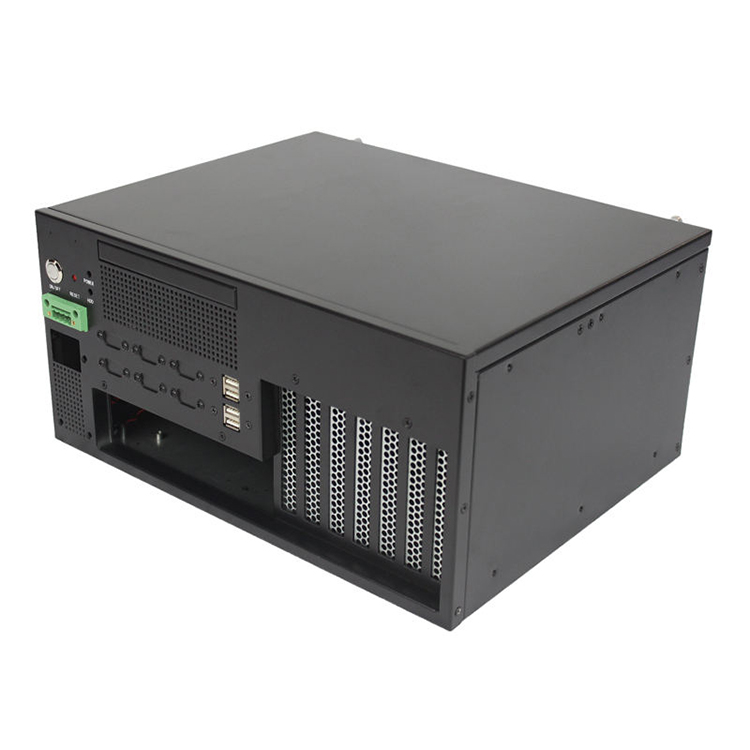
For projects that need more expansion, a six-slot chassis can provide space for additional PCIe cards and interfaces, while a smaller two-slot wallmount design may make more sense where footprint and simplicity matter more. iSTONECASE currently publishes both compact and expanded wallmount platforms rather than treating wall-mounted IPCs as a single fixed format.
The same engineering discipline also appears in our related Industrial PC Case Study, where complete system architecture—power, cooling, cards, cabling, structure, and service access—is considered before enclosure dimensions are frozen.
Different workload.
Same mistake to avoid.
Designing the box before understanding the system.
By the time the design becomes production-ready, the biggest improvement usually is not visual.
It is uncertainty reduction.
The early project says:
“Six slots, wall mount, industrial PC.”
The production package says:
That is a completely different level of information.
And it is what allows repeat production.
Do not send this:
Need industrial PC enclosure. Please quote.
Send this instead:
The supplier now has something to engineer.
That changes the conversation from “What box can you sell us?” to “What system do we need to manufacture?”
The most important lesson was not about sheet metal.
It was about interfaces.
Hardware interfaces.
Thermal interfaces.
Mechanical interfaces.
Human interfaces.
A wall-mounted industrial computer sits at the intersection of all four.
Make the enclosure slightly too small and cabling becomes painful. Put the intake in the wrong location and a filter becomes a thermal bottleneck. Hide the SSD behind three assemblies and a five-minute repair turns into an hour. Save material on the mounting structure and the entire computer feels unstable.
None of those failures look dramatic in a spreadsheet.
That is why experienced OEM buyers spend so much time on engineering review before approving volume production.
The Wall Mount Industrial Chassis is not the packaging around the computer.
It is part of the computer.
A Wall Mount Industrial PC is an industrial computer designed to attach directly to a wall, machine frame, cabinet structure, or similar vertical surface.
Unlike a standard desktop PC, its enclosure, mounting brackets, airflow, cable exits, expansion support, and service access should be engineered around vertical installation and industrial operating conditions.
A wall-mounted PC saves rack and floor space while placing computing hardware closer to the equipment it serves.
It can be a strong fit for automation, machine vision, security, edge computing, test equipment, and factory-control applications where a conventional 19-inch rack is unavailable or unnecessary.
Check motherboard dimensions, PCIe cards, PSU, storage, CPU cooler, airflow, ambient temperature, cables, mounting structure, dust exposure, and maintenance access.
Do not select the enclosure from motherboard form factor alone. The assembled system—including connectors and cables—determines the real space requirement.
Use the number required by the actual expansion-card architecture plus realistic future capacity.
Compact control systems may only need two slots, while machine vision, communications, data acquisition, security, or specialized industrial systems may justify four, six, or seven expansion positions.
No. More fans do not guarantee better cooling.
Real cooling depends on airflow direction, inlet and outlet area, filters, internal resistance, fan pressure capability, cable obstruction, component placement, and ambient temperature. A poorly planned system can contain several fans and still develop hot spots.
Use filters when airborne contamination creates a realistic risk and filtered ventilation suits the thermal design.
Filters can protect internal hardware, but they also restrict airflow and require maintenance. The enclosure should make filter inspection and replacement easy enough that technicians will actually do it.
No. The appropriate rating is better than the highest rating.
Environmental protection must match the real exposure while still allowing the system to manage heat. Dust, occasional water exposure, outdoor weather, and high-pressure washdown require different enclosure strategies.
Provide component drawings, enclosure limits, expansion cards, power architecture, cooling targets, I/O, cable requirements, mounting method, operating environment, maintenance needs, volume, destination market, and commercial targets.
More complete inputs reduce redesign cycles and make prototype evaluation far more useful.
Yes. Prototype before volume production whenever the enclosure is customized.
The prototype should verify component fit, assembly sequence, mounting, airflow, cable routing, filter access, serviceability, panel alignment, structural behavior, and manufacturability—not only appearance.
Designing the enclosure before the complete system architecture is defined.
A motherboard outline is not enough. Expansion cards, power cables, storage, cooling, connector access, mounting orientation, service procedures, and operating environment all influence the final chassis geometry.

댓글