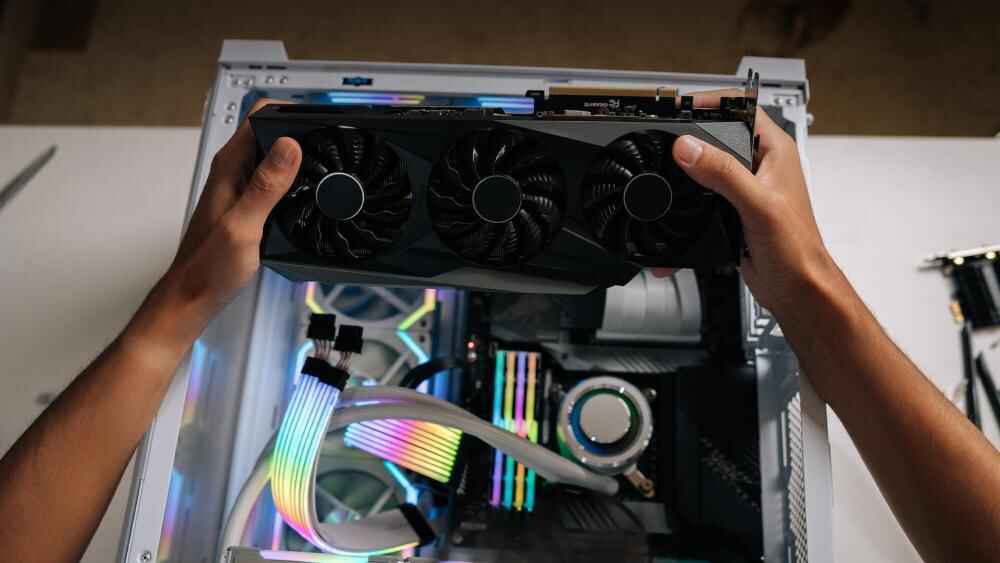
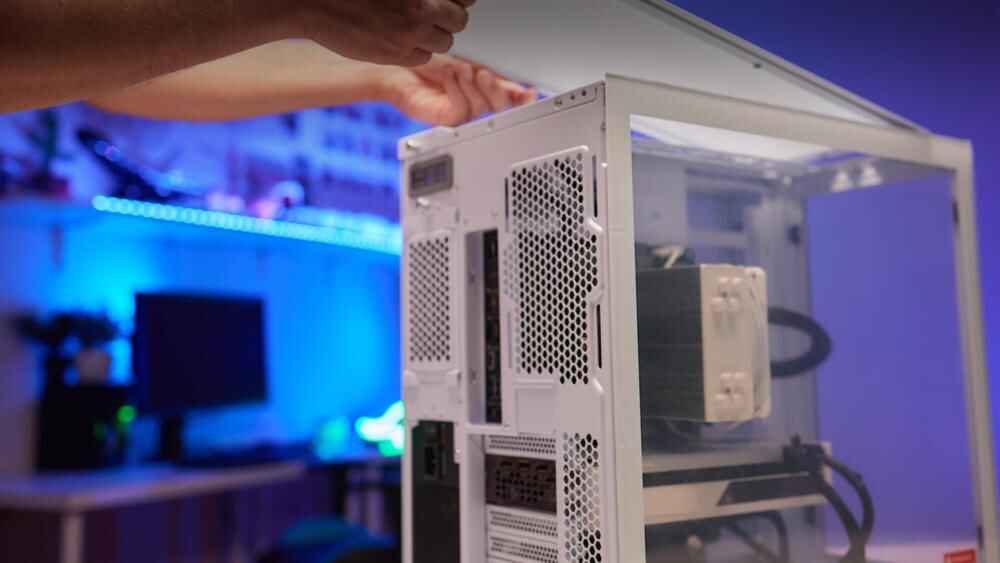
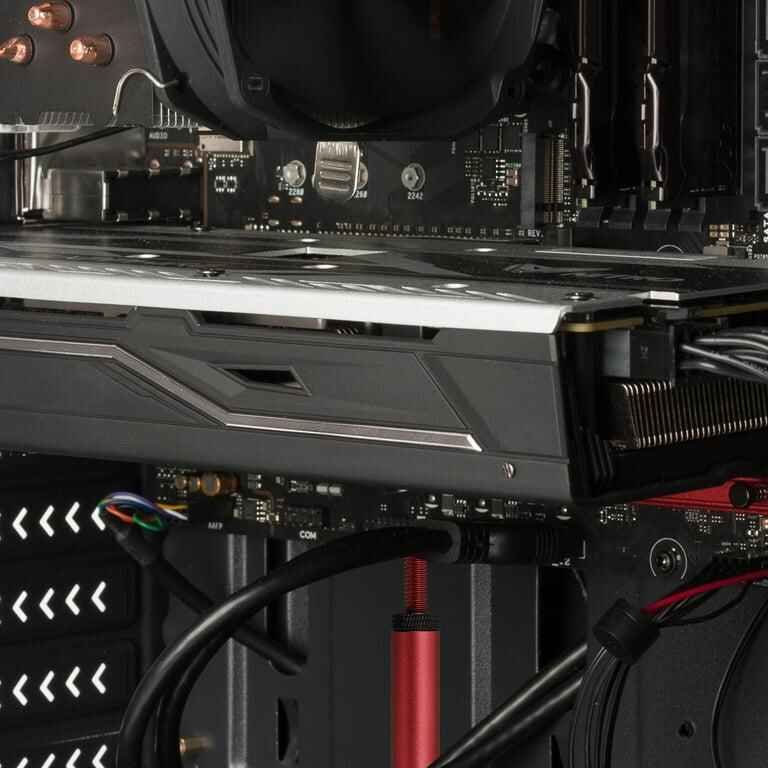
لا تقم أبدًا بالموافقة على حاوية ما بناءً على طول وحدة معالجة الرسومات (GPU) وحده. تحقق من الطول والارتفاع والسماكة وموضع الموصل ومساحة انحناء الكابل ومكونات التثبيت وتدفق الهواء ومسار التثبيت الفعلي.
تحقق من الرقم التسلسلي الدقيق لبطاقة الرسومات, ، وليس مجرد عائلة وحدات معالجة الرسومات (GPU). فقد يختلف طول بطاقتي RTX 5090 عن بعضهما بأكثر من 50 ملم.
تصف أبعاد وحدة معالجة الرسومات (GPU) المنشورة مواصفات البطاقة. إلا أنها لا تصف دائمًا المساحة الكاملة التي تحتاجها البطاقة المثبتة.
توصي شركة NVIDIA بتوفير مساحة إضافية حول بعض بطاقات الرسومات المتطورة من أجل تمرير كابلات الطاقة وتسهيل تدفق الهواء، مما يثبت أن الأبعاد الاسمية للبطاقة ليست سوى نقطة البداية.
يمكن أن تؤدي المراوح الأمامية، والمبردات، وأقفاص محركات الأقراص، وحوامل الدعم، والرافعات، والصفائح المعدنية الهيكلية إلى تقليل المساحة الخالية المتاحة لوحدة معالجة الرسومات (GPU).
بالنسبة لمشاريع تصنيع المعدات الأصلية (OEM) ومشاريع الإنتاج المتكرر، يجب التحقق من صحة التكوين النهائي باستخدام الرسومات والنموذج الأولي المادي قبل تثبيت تصميم الهيكل.
قد يبدو اختيار غلاف لوحدة معالجة الرسومات (GPU) أمرًا سهلاً.
احسب طول البطاقة. احسب مواصفات الهيكل. قارن بين الرقمين.
تم.
إلا أن هذا هو بالضبط ما يؤدي إلى حدوث أخطاء التوافق المكلفة.
لا يعني بالضرورة أن بطاقة معالجة الرسومات (GPU) التي يبلغ طولها 330 ملم ستتناسب بسهولة داخل هيكل يُعلن عن مسافة قصوى مخصصة للبطاقة تبلغ 350 ملم. فقد تختفي الـ 20 ملم المتبقية بعد إضافة جدار المروحة الأمامية، أو المبرد، أو موصل الطاقة، أو دعامة التثبيت، أو حزمة الكابلات، أو حافة الصفائح المعدنية، أو الزاوية المطلوبة لتمرير البطاقة فعليًّا عبر الفتحة.
هذا التمييز له أهمية أكبر بكثير في مشاريع الأجهزة بين الشركات (B2B) مقارنةً بتجميع جهاز كمبيوتر مكتبي لمرة واحدة.
إذا كنت تطلب 100 أو 500 أو 2,000 نظام، فإن عبارة “من المحتمل أن نتمكن من تكييف الأمر” لا تُعد مواصفة توافقية.
إنه مشروع قانون لإعادة صياغة قانون مستقبلي.
أبعاد وحدة معالجة الرسومات (GPU) هي نطاق ثلاثي الأبعاد، وليست رقمًا واحدًا
عندما يتحدث المهندسون عن أبعاد وحدة معالجة الرسومات (GPU)، هناك ثلاثة قياسات واضحة:
الطول — يُقاس عادةً من حامل منافذ الإدخال/الإخراج الخلفي باتجاه الطرف المقابل للبطاقة.
الارتفاع — المسافة الممتدة لأعلى من واجهة PCIe باتجاه اللوحة الجانبية أو غطاء الهيكل.
السماكة — المساحة الجانبية التي تشغلها فتحات التوسعة PCIe.
هذه الأرقام مهمة.
إنها ببساطة غير كافية.
ويمكن أن يشمل نطاق التثبيت الفعلي أيضًا ما يلي:
بروز موصل الطاقة؛;
نصف قطر انحناء الكابل؛;
هندسة الدعامة الخلفية؛;
بروز المبدد الحراري أو الغطاء؛;
سماكة اللوحة الخلفية؛;
الأجهزة التي تدعم وحدة معالجة الرسومات (GPU)؛;
بطاقات الارتفاع؛;
بطاقات PCIe المجاورة؛;
جدران المروحة؛;
مجموعات المشعاعات؛;
أقفاص محركات؛;
قنوات توجيه الكابلات؛;
تقوية الهيكل؛;
المساحة اللازمة للإزالة والتركيب.
ولهذا السبب، فإن المشترين الذين يبحثون عن أبعاد بطاقة الرسومات فيما يتعلق بخوادم GPU، ينبغي البدء بالبطاقة المستخدمة فعليًّا في الإنتاج، بدلاً من افتراض أن كل بطاقة تعتمد على نفس وحدة معالجة الرسومات (GPU) ستشغل نفس الحجم الميكانيكي.
قد يكون السيليكون هو نفسه.
أما المعدن المحيط به فغالبًا ما لا يكون كذلك.
تُظهر المواصفات الحالية لوحدة معالجة الرسومات (GPU) مدى ضخامة الفرق الذي يمكن أن يحدث
إليكم مقارنة مفيدة من واقع الحياة.
تطرح شركة NVIDIA حاليًا بطاقة GeForce RTX 5090 Founders Edition التي يبلغ طولها 304 ملم وعرضها 137 ملم. وتذهب إرشادات التركيب الخاصة بها إلى أبعد من ذلك: تقول NVIDIA إن العلبة يجب أن توفر مساحة لـ أبعاد التثبيت: 304 × 137 × 61 ملم, ، في حين أن آخر يجب تخصيص مساحة تبلغ 36 ملم لكابلات الطاقة. كما توصي شركة NVIDIA بترك مساحة خالية حول بطاقة الرسومات تعادل حجم فتحة توسعة أخرى غير مستخدمة، وذلك لتحسين تدفق الهواء.
يُعد الحد الأقصى لطول وحدة معالجة الرسومات (GPU) أحد أقل مواصفات العلب فائدةً عندما يتم ذكره بمفرده.
يبدو هذا قاسياً؟
فكر فيما يوحي به هذا الرقم فعليًّا.
إذا كان هيكل الحاسوب يذكر أن “الطول الأقصى لوحدة معالجة الرسومات (GPU) هو 350 ملم”، فإنك لا تزال لا تعرف ما إذا كان هذا الرقم يفترض:
لا يوجد مبرد أمامي؛;
لا توجد مروحة أمامية؛;
سمك معين للمروحة؛;
لا يوجد قفص محرك؛;
لا يوجد قضيب عرضي مثبت؛;
موضع معين في اللوحة الأم؛;
لا يوجد موصل طاقة على الحافة الأمامية؛;
التركيب الرأسي أو الأفقي؛;
فتحة PCIe مجاورة خالية.
ما يراه المشتري:
وحدة معالجة الرسومات (GPU): 330 ملم الحد الأقصى لطول الهيكل: 350 ملم
هامش يبلغ عشرين ملمًا.
يبدو آمنًا.
لن أوافق على ذلك.
قد تكون تلك العيار 20 ملم مخصصة بالفعل لشيء آخر.
ولهذا السبب توافق حاويات وحدة معالجة الرسومات (GPU) ينبغي تقييمها في ضوء النظام المُركَّب بالكامل، وليس استنادًا إلى ورقة بيانات الهيكل بمفردها. وتؤكد إرشادات الموقع المتعلقة بالحاويات عالية الكثافة على نفس النقطة الهندسية: حيث يتأثر تركيب وحدة معالجة الرسومات (GPU) بمسافات التباعد بين البطاقات، ومسافة التباعد بين الموصلات، ونظام التثبيت، وتدفق الهواء، وتركيب الكابلات، وإمكانية الوصول للصيانة.
معيار «SFF-Ready» يجعل المشكلة واضحة للعيان
تُعد إرشادات NVIDIA الخاصة بمعايير SFF-Ready معيارًا مرجعيًّا مفيدًا لأنها لا تركز على طول وحدة معالجة الرسومات (GPU) وحدها.
بالنسبة لبطاقات GeForce المخصصة للمتحمسين والمستوفية للشروط، تنص الإرشادات الحالية على ما يلي:
الطول الأقصى: 304 ملم
الارتفاع الأقصى 151 ملم، بما في ذلك نصف قطر انحناء كابل الطاقة
50 ملم أو 2.5 فتحة كحد أقصى للعمق
تقول شركة NVIDIA إن الغرض من هذه القيود هو الحفاظ على المساحة، والخلوص، ومساحة العمل داخل العلب ذات الحجم الصغير المتوافقة.
وحدة معالجة الرسومات (GPU) ليست مجرد قطعة مستطيلة الشكل تطفو في برنامج CAD. يجب تزويدها بالطاقة. ويجب أن يصل الهواء إليها. ويجب أن يقوم فني بتركيبها. ولا يزال من الضروري إغلاق الغطاء بعد ذلك.
الخطوة 1: تحديد رقم الجزء الدقيق لوحدة معالجة الرسومات (GPU)
افعل ذلك قبل قياس أي شيء آخر.
لا تكتب:
وحدة معالجة الرسومات (GPU): RTX 5090
اكتب:
الشركة المصنعة لوحدة معالجة الرسومات (GPU): الطراز الدقيق: رقم القطعة الدقيق: التنقيح، إن وجد:
لماذا؟
لأن مصنعي اللوحات الإضافية يصنعون بأنفسهم المبردات، ولوحات الدوائر المطبوعة، والأغطية، والحوامل، واللوحات الخلفية، وتصميمات الموصلات.
تشير شركة NVIDIA نفسها إلى أن مواصفات بطاقات الرسومات قد تختلف باختلاف الشركة المصنعة للبطاقات الإضافية، وتنصح المستخدمين بالاطلاع على مواصفات الشركة المصنعة للتأكد من مواصفات الطراز الفعلي الذي تم شحنه.
ويزداد هذا الأمر أهميةً عندما يكون لدى قسم المشتريات عدد من الموردين المعتمدين.
لنتخيل أن «Engineering» قامت بالتحقق من صحة البطاقة «أ».
تم شراء الطراز الأحدث بدلاً من البطاقة «ب» لأن شريحة وحدة معالجة الرسومات (GPU) وسعة الذاكرة والأداء تبدو متكافئة.
كهربائيًا؟
ربما لا بأس بذلك.
من الناحية الميكانيكية؟
ربما تكون قد أضفت للتو 40 ملم إلى المبرد.
لم يعد المرفق الذي تمت الموافقة عليه معتمدًا.
الخطوة 2: قياس طول وحدة معالجة الرسومات (GPU) بشكل صحيح
يحظى الطول بأكبر قدر من الاهتمام، لذا ابدأ من هناك.
لكن حدد نقاط مرجعيتك.
في مشروع تصميم العلبة، عادةً ما ترغب في معرفة المسافة بين سطح التثبيت الخلفي لبطاقة PCIe وأبعد نقطة أمامية في وحدة معالجة الرسومات (GPU) المثبتة.
لا تستبعد بشكل عشوائي:
ملحقات الكفن؛;
ريش المبرد البارزة؛;
الموصلات المثبتة في المقدمة؛;
retention tabs;
decorative cooler structures;
factory brackets.
Then compare that with the usable enclosure space.
Not the outside chassis depth.
Not the distance from rear panel to front panel.
Usable space.
If a 600 mm deep enclosure has a 38 mm fan wall, backplane structure, front I/O assembly, cable zone, and sheet-metal reinforcements in front of the GPU, none of those millimeters belong to your graphics card.
When comparing GPU Length Clearance across rackmount platforms, verify what hardware is installed when the manufacturer quotes the limit. The site’s 4U GPU chassis range itself varies in internal layout, PCIe capacity, cooling structure, and motherboard support, so the nominal rack height alone does not answer GPU fit.
Step 3: Check Card Height and Side-Panel Clearance
This measurement causes more trouble than many buyers expect.
لماذا؟
موصلات الطاقة.
A tall GPU might fit beneath the chassis cover while bare.
Then the power cable goes in.
Now the connector housing and cable need to turn.
Suddenly the lid touches the cable.
Bad situation.
For its RTX 5090 installation guidance, NVIDIA explicitly recommends 36 mm of additional space for power cables beyond the stated card clearance.
And use the actual power cable you expect in production.
A soft lab cable and a short, stiff high-current harness can behave very differently.
Step 4: Translate Slot Count Into Millimeters
“2-slot.”
“2.5-slot.”
“3-slot.”
“3.5-slot.”
These descriptions are useful shorthand.
They are not substitutes for millimeter dimensions.
One manufacturer’s “3-slot” cooler may not occupy exactly the same thickness as another manufacturer’s.
For dense systems, record both:
nominal slot classification;
actual maximum card thickness in millimeters.
This becomes especially important when evaluating GPU Slot Thickness in a rackmount platform. A form factor that technically provides enough PCIe slots may still lack the physical spacing, cooling volume, or riser arrangement required by the chosen cards. The site’s 1U, 2U, and 4U comparison similarly treats GPU support as part of a wider rack-density and cooling decision rather than an expansion-slot count alone.
For multi-GPU systems, thickness affects another variable:
pitch.
If cards sit too close together, the system may still assemble perfectly.
Then thermals suffer.
Physical fit passed.
System design failed.
Step 5: Add Power-Connector Keep-Out Zones
This is where CAD models frequently become too optimistic.
A simplified GPU model may show the card body.
It may not show the connected cable.
Add the actual connector and create a realistic keep-out volume around it.
تحقق من ذلك:
connector direction;
connector insertion depth;
cable bundle diameter;
minimum practical bend;
nearby sheet metal;
side panel;
adjacent GPU;
retention hardware;
fan housing;
radiator frame.
Do not bend a high-current cable sharply simply because CAD says there is no collision.
Mechanical fit must respect how the real harness needs to sit.
Step 6: Subtract Fans, Radiators, and Drive Hardware
Case specifications often become conditional here.
A chassis may support a long GPU.
A chassis may support a thick radiator.
The dangerous assumption is:
therefore it supports both at the same time.
Not always.
Some enclosure designs use the same internal volume for alternative configurations.
No radiator?
More GPU room.
Install a radiator and fan stack?
GPU clearance drops.
The same applies to:
front storage cages;
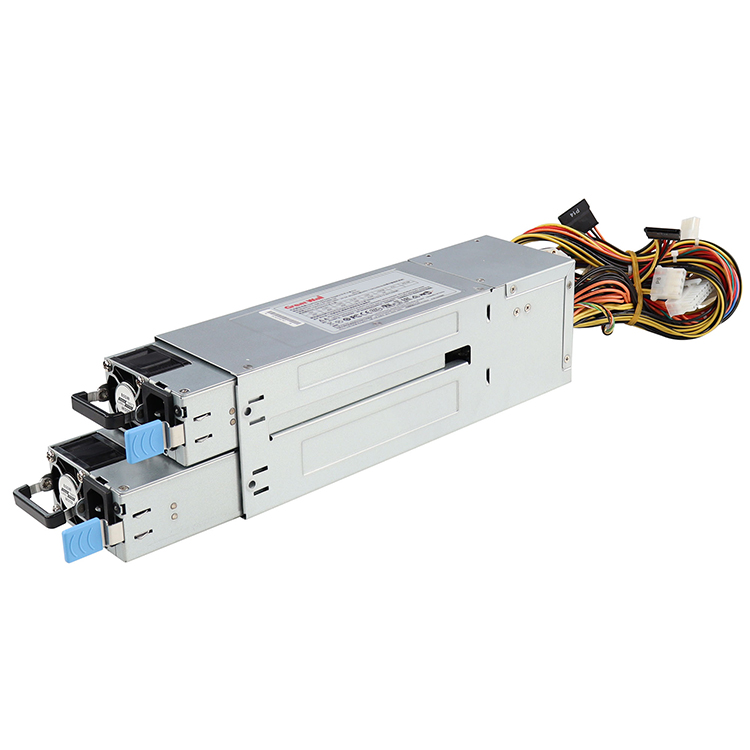
internal PSUs;
pump brackets;
cable bars;
card guides;
hot-swap backplanes.
This is why the installed configuration should appear in the compatibility drawing.
Do not approve isolated components.
Approve assemblies.
Step 7: Include the GPU Retention Structure
Large GPUs are not only getting physically larger.
They are heavy.
The site’s existing engineering guide notes that current graphics cards can exceed 2 kg and explains how a retention structure changes the mechanical load path between the GPU and chassis.
That bracket needs room too.
And this is where a real forum case caught my attention.
A builder had a chassis officially rated for a 369 mm maximum GPU and a graphics card listed at 357 mm.
On paper?
Twelve millimeters spare.
Easy.
Then installation started.
The GPU mounting bracket collided with a front fan. The builder removed the fan. The bracket then hit the frame supporting the front fan assembly. After forcing the bracket into place, the graphics card itself still could not be maneuvered comfortably into the chassis without tilting it through awkward angles.
The buyer had even checked compatibility tools beforehand.
The numbers said yes.
The physical system said no.
The original forum discussion shows exactly why a 1D specification can fail in a 3D assembly.
That story sticks with me because the mistake was not stupidity.
The buyer checked the specifications.
The specifications were simply incomplete for the decision being made.
Step 8: Check the Installation Path, Not Just the Final Position
This gets missed constantly.
CAD shows the GPU sitting perfectly inside the enclosure.
Great.
How does it get there?
A long GPU may need to be:
inserted at an angle;
rotated around a fan wall;
lowered toward the PCIe slot;
moved sideways into the rear bracket;
pushed into a riser;
secured with a retention mechanism.
Now imagine only 5 mm of nominal free space exists at the far end.
The final position works.
The insertion path does not.
For production systems, ask engineers to model or physically test the installation sequence.
The GPU should not require:
flexing the PCB;
forcing sheet metal;
temporarily removing unrelated components;
scraping the heatsink;
bending connectors;
loosening structural hardware.
If assembly technicians need “the trick” that only one senior engineer knows, the design is not production-friendly.
Step 9: Leave Airflow Space
A GPU that barely fits can still be the wrong GPU for the enclosure.
Cooling needs space.
NVIDIA’s RTX 5090 guidance recommends leaving clearance around the graphics card equivalent to another unused expansion slot because it can improve airflow.
That should change the buying question.
Do not ask only:
Will the card fit?
اسأل:
Will the card fit while receiving the airflow it was designed to use?
For air-cooled GPU servers, inspect:
fan inlet clearance;
blower intake;
exhaust direction;
adjacent card spacing;
recirculation zones;
cable obstruction;
موضع جدار المروحة؛;
static-pressure requirement.
A 76 mm card stuffed into a 77 mm cavity technically fits.
That does not make it good thermal engineering.
Step 10: Check Service Clearance
Now assume the GPU fails six months after deployment.
Can a technician remove it?
This sounds like tomorrow’s problem.
It becomes today’s design requirement very quickly when the system is in a data center, factory, edge cabinet, or overseas customer site.
اسأل:
Can the power cable be disconnected by hand?
Can the retention bracket be reached?
Can the card move far enough to disengage from the PCIe slot?
Does another GPU need to be removed first?
Do fan modules block extraction?
Does the system need to leave the rack?
Can the GPU be replaced without disconnecting storage or cooling hardware?
Good enclosure design protects service time as aggressively as it protects component fit.
Step 11: Put the Measurements Into the RFQ
Procurement should not send:
Need chassis supporting RTX 5090.
That leaves too much interpretation.
A better RFQ includes:
GPU Input
ما يجب تقديمه
Manufacturer
Exact GPU vendor
الطراز
Full commercial model name
Part number
Manufacturer part number
الطول
Maximum installed card length
الارتفاع
Maximum card height
السماكة
Millimeters plus slot classification
الوزن
Card mass
Power connector
Type and physical location
Cable keep-out
Required bend and routing space
PCIe orientation
Direct slot, riser, vertical, horizontal
Quantity
Number of GPUs per enclosure
التبريد
Blower/open-air/liquid-cooled configuration
Retention
Required support or restraint method
مسار الخدمة
Required GPU removal direction
Approved alternatives
Every alternate GPU SKU
If you need a repeatable sourcing workflow, How to Measure GPU Clearance should become part of the RFQ package rather than a measurement made after suppliers quote. The site’s chassis RFQ guide already recommends providing GPU interfaces, controlled drawings, critical dimensions, cooling requirements, and production configuration before pricing.
That saves arguments later.
“What did you mean by supports this GPU?”
Exactly.
Define it before the PO.
How Much GPU Clearance Margin Should You Leave?
There is no universal magic number.
Five millimeters may be plenty in one direction and useless in another.
The right margin depends on:
fabrication tolerances;
GPU dimensional tolerance;
motherboard position;
riser location;
removable panels;
cable stiffness;
cooling hardware;
assembly direction;
service needs;
production variability.
I prefer functional clearance over arbitrary clearance.
على سبيل المثال:
A 20 mm empty zone in front of the GPU is less valuable than 10 mm placed exactly where the power cable, retaining latch, or technician’s fingers need it.
PCIe reference → GPU height → power connector → cable bend → chassis cover
For thickness:
Motherboard/riser reference → GPU cooler → airflow gap → adjacent GPU or chassis wall
Then add applicable manufacturing and assembly tolerance.
This quickly exposes optimistic specifications.
If the total available space is 360 mm and your combined requirement is 359 mm, the CAD model may turn green.
I would still be nervous.
Production parts are not mathematical surfaces.
Prototype With the Worst-Case GPU
If your enclosure must support three approved cards, do not prototype with the smallest one.
Install the longest.
Then the tallest.
Then the thickest.
If those characteristics belong to different models, test all relevant extremes.
Also populate:
real fans;
real PSU cables;
risers;
retention hardware;
adjacent cards;
storage;
مجموعات المشعاعات؛;
side panels.
Then remove the GPU.
And reinstall it.
A prototype that only proves “we managed to assemble it once” is weak evidence.
Repeatability matters.
The Buying Rule I Would Use
If I had to reduce this entire article to one procurement rule, it would be this:
Never approve a GPU enclosure from the GPU name and maximum chassis length alone. Approve an exact card SKU inside an exact system configuration.
That changes the question from:
Does this enclosure support RTX 5090?
to:
Does this enclosure support this exact RTX 5090 card, in this PCIe position, with this power cable, fan wall, retention system, airflow requirement, assembly path, and service procedure?
Longer question.
Much cheaper answer.
For custom GPU server projects, send the chassis manufacturer the exact GPU model, mechanical drawing, quantity, motherboard layout, power-cable requirements, retention method, fan arrangement, and rack-depth limits before freezing the enclosure.
Millimeters are cheap during design.
They get expensive after production.
الأسئلة الشائعة
ما هي أبعاد وحدة معالجة الرسومات (GPU) التي يجب عليّ التحقق منها قبل اختيار العلبة؟
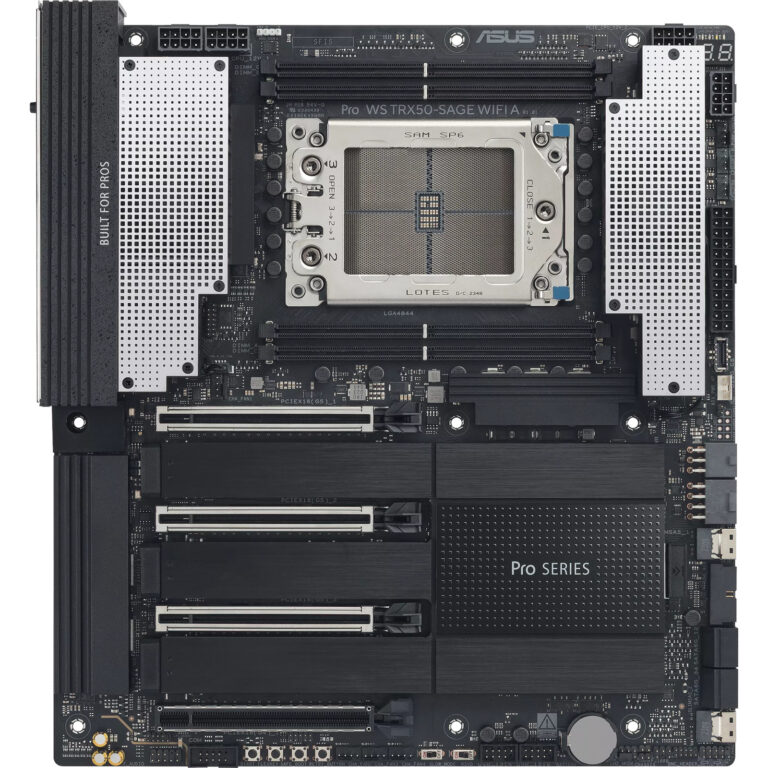
Also verify cooler overhangs, rear bracket geometry, retention hardware, airflow gaps, and the installation/removal path. Nominal card dimensions alone may not represent the complete installed envelope.
كيف أعرف ما إذا كانت وحدة معالجة الرسومات (GPU) الخاصة بي ستتسع داخل العلبة؟
Compare the exact GPU model against the enclosure’s usable internal clearance in all three dimensions.
Then subtract space occupied by fans, radiators, drive cages, brackets, cables, risers, and other hardware. A length-only comparison is not enough.
ما مقدار المساحة الإضافية التي يجب أن أتركها حول وحدة معالجة الرسومات (GPU)؟
There is no single clearance value that works for every enclosure.
Leave enough space for manufacturing tolerances, cable routing, airflow, assembly, and servicing. The location of the free space matters more than simply adding an arbitrary number of millimeters.
هل يُعد سمك فتحة بطاقة الرسومات عاملاً مهمًا عند اختيار هيكل الكمبيوتر؟
Yes. GPU thickness determines how many PCIe slots and how much lateral space the card consumes.
It also affects airflow, adjacent GPU spacing, riser design, and whether other expansion cards remain usable. Record actual thickness in millimeters rather than relying only on “2-slot” or “3-slot” labels.
هل يكفي طول وحدة معالجة الرسومات (GPU) الأقصى للتأكد من التوافق؟
No. Maximum GPU length is only one part of compatibility.
A card can satisfy the length specification but still collide with a fan, radiator, support bracket, power cable, chassis frame, or side panel.
هل يجب عليّ التحقق من الطراز الدقيق لوحدة معالجة الرسومات أم الاكتفاء بسلسلة الوحدة فقط؟
Always check the exact model and part number.
Different manufacturers can build cards around the same GPU with very different coolers and dimensions. Current RTX 5090 examples differ by more than 50 mm in length.
لماذا يُعد الفراغ المحيط بكابلات الطاقة أمرًا مهمًا؟
The connector and cable can require significant space beyond the GPU body.
For example, NVIDIA’s RTX 5090 installation guidance recommends planning 36 mm of additional space for power cables. A GPU can physically fit while its power connection cannot.
كيف ينبغي لمصنّع المعدات الأصلية (OEM) التحقق من توافق حاوية وحدة معالجة الرسومات (GPU)؟
Use drawings first, then validate the final assembly with a physical prototype.
Install the exact GPU, cables, fans, retention hardware, risers, and adjacent components. Check assembly, airflow, side-panel closure, service access, and GPU removal before approving volume production.
مارك لي - مؤسس ومتخصص في تصنيع هياكل الخوادم (OEM/ODM)
مارك لي هو مؤسس شركة ISTONECASE، ويتمتع بخبرة تمتد إلى 20 عامًا في صناعة هياكل الخوادم. وهو متخصص في حلول OEM/ODM الخاصة بوحدات معالجة الرسومات (GPU) والذكاء الاصطناعي (AI)، بالإضافة إلى الهياكل المخصصة للتركيب على الرفوف، والهياكل الصناعية، والهياكل المثبتة على الحائط، وأجهزة التخزين الشبكية (NAS)، وهياكل Mini-ITX، والهياكل متعددة العقد. وتساهم خبرته في دعم مشاريع الأجهزة المخصصة لمراكز البيانات، وحوسبة الذكاء الاصطناعي، وتخزين البيانات المؤسسية، والحوسبة الطرفية، والشبكات، والتطبيقات الصناعية.